
Horror wants to scare you; a thriller wants to keep you guessing and breathless. The clearest tells are point of view and climax: horror usually locks you inside a victim’s dread, while a thriller often lets you glimpse the pursuer’s plan and resolves with a reveal, capture, or answered question rather than survival alone. Plenty of movies and novels blend both, so treat these as tendencies, not walls.
TL;DR:
- Sight evidence that horror emphasizes dread through slow atmosphere, grotesque imagery, jumpscares, and victim-centered perspective, while thrillers rely on suspense, misdirection, and shifting viewpoints.
- The typical horror climax involves survival or defeat of a terrifying entity, whereas thrillers resolve with a reveal, a capture, or solving a mystery, making endings a key differentiator.
- Horror often signals fear through monsters, body horror, and taboo imagery, while thrillers use concepts like pursuit, investigation, red herrings, and ticking clocks to build tension.
- Genre blending is common, with hybrid works combining elements of both genres, such as Silence of the Lambs or Resident Evil, requiring close attention to tone and perspective.
- Sampling titles beforehand through catalogs and previews can clarify a work’s tone and help distinguish whether it leans toward dread or suspense before committing.
Table of Contents
- Thriller vs Horror: What Horror Is Actually Trying to Do
- Thriller vs Horror: What a Thriller Is Actually Trying to Do
- Thriller or Horror? Side-by-Side Diagnostic Differences
- Tropes and Subgenre Markers Worth Knowing
- Horror vs Thriller Books and Films: Real Examples
- How to Tell If Something Is Horror or Thriller
- Where a Curated Catalog Helps You Test the Difference
- Why the Genre Line Still Matters
- Sample a Chapter Before You Decide
- Sources
- FAQ
Thriller vs Horror: What Horror Is Actually Trying to Do
Horror exists to make you afraid, and it isn’t shy about it. The goal is a physical reaction, dread that sits in your chest, a flinch, a refusal to check the closet before bed. Backstage’s genre breakdown frames this plainly: horror is built to trigger fear and visceral response, where a thriller leans on curiosity and excitement instead.
Writers and directors get there through specific tools:
- Atmosphere that builds slowly, using silence, shadow, and isolation
- Visceral or grotesque imagery meant to disturb rather than merely surprise
- Jump scares and sudden sound design cues in film
- Evocative, sensory language in prose that lingers on decay, wrongness, or the body
The subgenres map onto that intent. Supernatural horror leans on the unexplainable, slashers weaponize a physical stalker, psychological horror rots the mind before the body, cosmic or Lovecraftian horror makes humanity feel small against something ancient, and folk or ritual horror turns community and tradition into the threat. Each version changes what scares you, but all of them aim at the same target: fear that outlasts the story.
Thriller vs Horror: What a Thriller Is Actually Trying to Do
A thriller is engineered for suspense, not dread. It wants your pulse up and your brain working, chasing a question rather than recoiling from an image. That distinction between fear and excitement is the core split Backstage draws when separating the two genres, and it holds across film and fiction alike.
The mechanics behind that feeling include:
- Tight pacing that rarely lets the plot breathe
- Red herrings and misdirection that keep you guessing
- Cliffhangers stacked at chapter or act breaks
- Shifting POV, sometimes handing you the antagonist’s plan before the hero catches up
- Unreliable narrators who make you question what you just read
Subgenres branch from what’s being chased or solved. Psychological thrillers destabilize perception, spy thrillers run on tradecraft and betrayal, legal thrillers turn courtrooms into battlegrounds, crime thrillers follow the investigation, and action thrillers trade puzzle-solving for momentum and physical stakes. What unites them is a promise: stick with the plot, and you get an answer.
Thriller or Horror? Side-by-Side Diagnostic Differences
Once you know what each genre is chasing, spotting the difference in a specific book or film gets a lot faster. Run through these four checkpoints.
- Tone. Horror sits in dread and repulsion; a thriller runs on adrenaline and curiosity. If you feel unsettled by the atmosphere itself, that’s horror. If you’re anxious to find out what happens next, that’s thriller.
- Point of view. Horror tends to trap you inside the victim’s experience, feeding fear through limited knowledge. Thrillers often shift POV, sometimes into the attacker’s head, which Backstage’s analysis points to as a deliberate device for building unpredictability.
- Pacing. Horror favors a slow burn that lets dread accumulate; thrillers build momentum through twists and escalating stakes.
- Climax. Horror climaxes usually hinge on survival, whether the protagonist escapes or defeats an evil force. Thrillers resolve through a reveal, capture, or solved mystery, a pattern No Film School lays out clearly when comparing the two genres’ typical endings. It’s also why horror monsters so often return for a sequel while thriller villains tend to stay caught.
Pro Tip: Watch what survives the ending. If the threat itself could still be out there, you’re likely in horror territory. If the mystery is closed and the antagonist is identified or stopped, you’re in thriller territory.
Tropes and Subgenre Markers Worth Knowing
Recurring devices are shortcuts. Learn to spot them and you’ll classify a work faster than any plot summary could help you do.
Horror tropes tend to signal fear even when the pacing borrows from thrillers:
- Monsters, possession, and body horror point straight at dread
- Grotesque or taboo imagery signals horror intent regardless of how fast the plot moves
Thriller tropes point at suspense and problem solving, as BookRiot’s genre comparison notes:
- A MacGuffin, the object or secret everyone is chasing, drives plot momentum
- Red herrings and ticking clocks manufacture urgency and misdirection
When a story stacks both lists, a slasher with a ticking clock, a kidnapping plot with supernatural undertones, you’re likely looking at a hybrid rather than a genre error.
Horror vs Thriller Books and Films: Real Examples
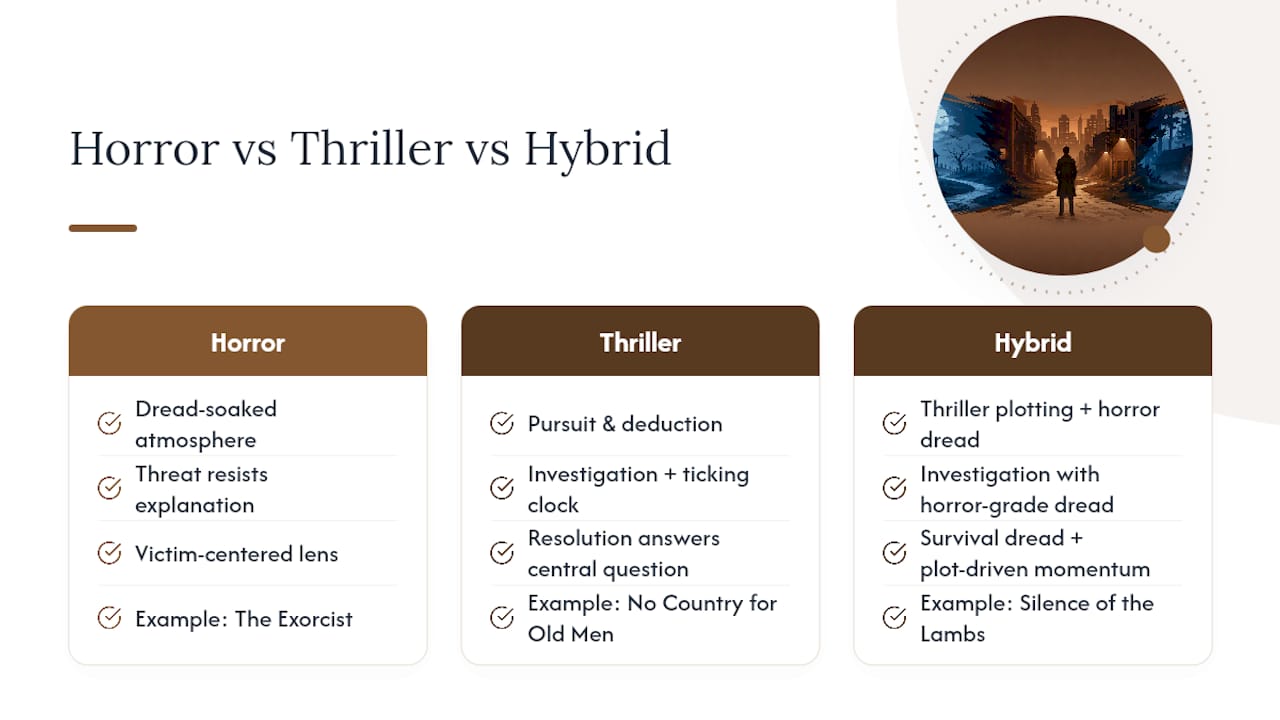
The Exorcist and The Haunting of Hill House are pure horror: dread-soaked atmosphere, a threat that resists tidy explanation, and a victim-centered lens throughout. No Country for Old Men and Agatha Christie’s And Then There Were None sit firmly in thriller territory, built on pursuit, deduction, and a resolution that answers the central question.
Hybrids are where things get interesting. Silence of the Lambs pairs thriller plotting (an investigation, a ticking clock, a killer to catch) with horror-grade dread around Hannibal Lecter and Buffalo Bill. Recent studio releases lean into this blend deliberately; the Resident Evil franchise markets itself explicitly as horror-thriller, mixing survival dread with plot-driven momentum.
How to Tell If Something Is Horror or Thriller
Run a quick mental checklist next time you’re mid-movie or three chapters into a book:
- What’s the emotional target? Fear and disgust point to horror; suspense and curiosity point to thriller.
- Whose experience are you locked into? Victim-only POV leans horror; access to the antagonist or investigator leans thriller.
- Where does the threat come from? Something unexplainable or monstrous leans horror; a human adversary with a plan leans thriller.
- What does the ending resolve? Survival alone signals horror; a solved mystery or capture signals thriller.
If three or more answers point the same direction, trust that lean. Genuine hybrids will split closer to even.
Pro Tip: Tone can flip your read on a scene. The exact same jump scare works as horror if it’s meant to prolong dread, and as a thriller beat if it’s punctuating a plot reveal, a distinction worth watching for according to BookRiot.
Where a Curated Catalog Helps You Test the Difference
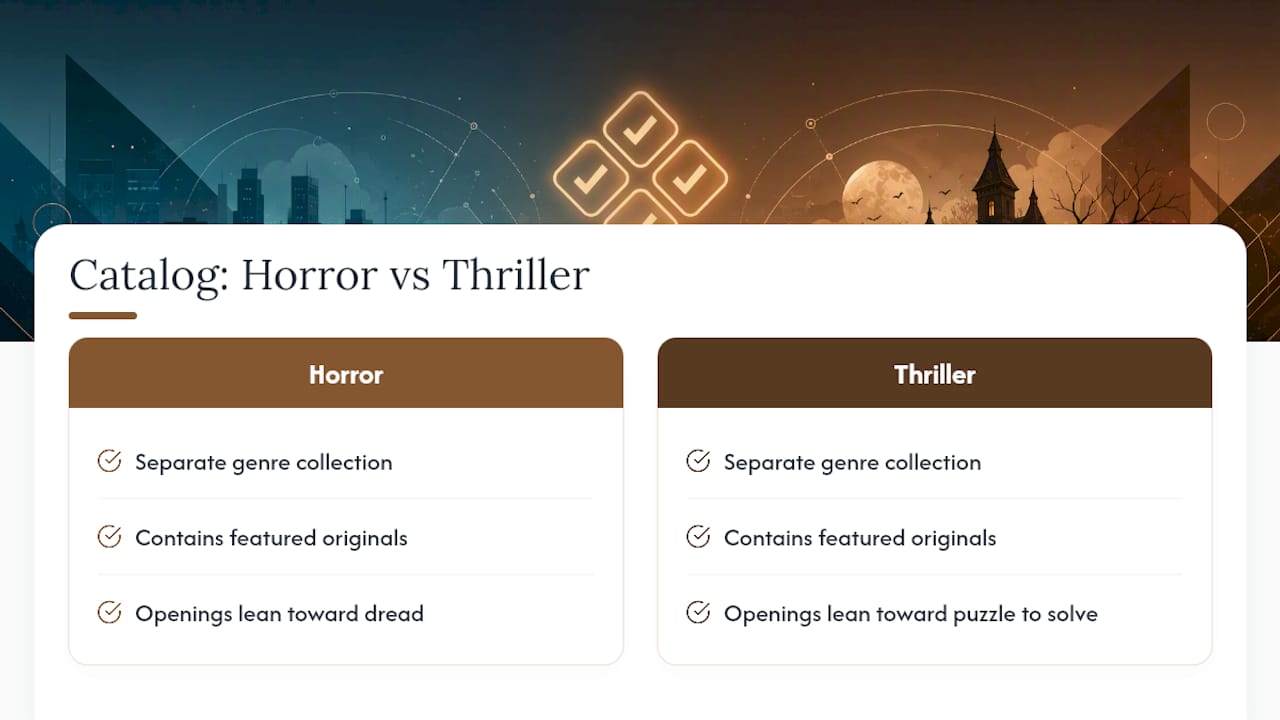
Reading definitions only gets you so far, at some point you need to sample actual tone. Thrillerhorrorsuspense organizes its catalog by genre for exactly this reason, letting readers browse horror titles and thriller titles as separate collections rather than one blended shelf. Featured original titles like ELVIS DIED I WAS THERE and Martha’s Tide sit inside that catalog as concrete examples to test against everything covered above, whether the opening pages lean toward dread or toward a puzzle you need solved.
Why the Genre Line Still Matters
Knowing whether something is horror or thriller isn’t academic, it sets your expectations and helps you recommend the right title to the right friend. That said, some of the best work lives in the overlap, and blending genres deliberately is a strength, not a flaw, when a writer knows which lever they’re pulling.
— lorraine
Sample a Chapter Before You Decide
You don’t have to guess which genre a book leans toward based on jacket copy alone. Thrillerhorrorsuspense lets you preview chapters before buying, so you can check whether a title’s opening pages lean into dread or momentum before spending a cent.
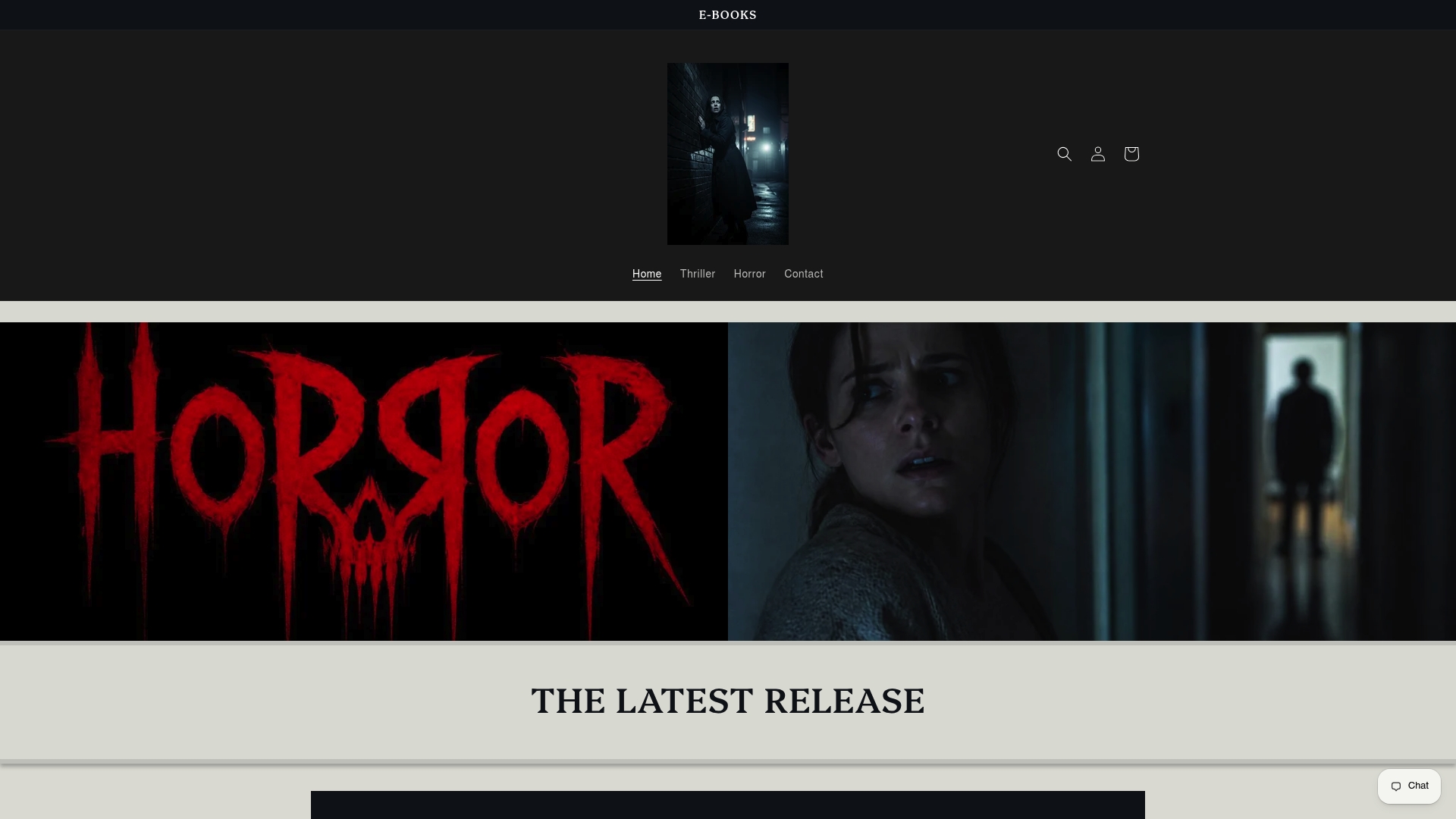
The catalog splits cleanly into horror and thriller collections, so you’re never digging through an unsorted shelf. Two originals worth sampling first: ELVIS DIED I WAS THERE, and Martha’s Tide, each available as a free preview chapter before purchase. Read the opening pages, decide if the tone matches what you’re chasing, dread or suspense, and go from there.
Sources
This article drew on genre analysis from Backstage, No Film School’s film-focused comparison, BookRiot’s trope breakdown, and LiteraryTerms’ genre overview for formal definitions.
- Thriller vs Horror — Backstage
- The Difference Between Horror and Thriller Movies and TV Shows — No Film School
- Thriller vs Horror — BookRiot
FAQ
Which Is Scarier, Horror or Thriller?
Horror is built specifically to scare you through dread, disgust, and visceral imagery, while a thriller aims for suspense and adrenaline rather than fear itself. If pure fright is what you’re after, horror is designed to deliver it; a thriller is designed to keep you guessing instead.
What Are the Three Levels of Horror?
Genre writers commonly describe three escalating levels: terror (dread built through anticipation before anything happens), horror (the direct, visceral reaction to something frightening on screen or page), and revulsion or gross-out horror (shock through graphic or grotesque imagery). Not every source draws these lines identically, but this three-tier framing shows up often in horror criticism.
Is Jaws a Horror or Thriller?
Jaws is widely classified as a thriller with horror elements, since it centers on suspense, a ticking clock, and a hunt for the shark rather than sustained dread alone. Its pacing and problem-solving structure, tracking and eventually confronting the threat, lines up with thriller conventions more than pure horror’s survival-climax pattern.
Is Thriller the Same as Scary?
Not quite. A thriller can be tense and unsettling, but its core goal is suspense and curiosity rather than fear itself, a distinction Backstage’s genre analysis draws explicitly. Horror is the genre built to scare you; thriller is the genre built to keep you hooked.